Have you ever wondered why some people steadily grow their wealth while others struggle despite earning a decent salary? At Egybanknotes, we believe the difference often comes down to strategy, not luck. In this guide, you’ll discover practical ways to increase your income in Egypt through side hustles, remote jobs, smart investments, AI tools, and passive income ideas. Whether you’re starting from scratch or looking to diversify your earnings, this article provides a clear roadmap to help you build multiple income streams and move closer to long-term financial freedom.
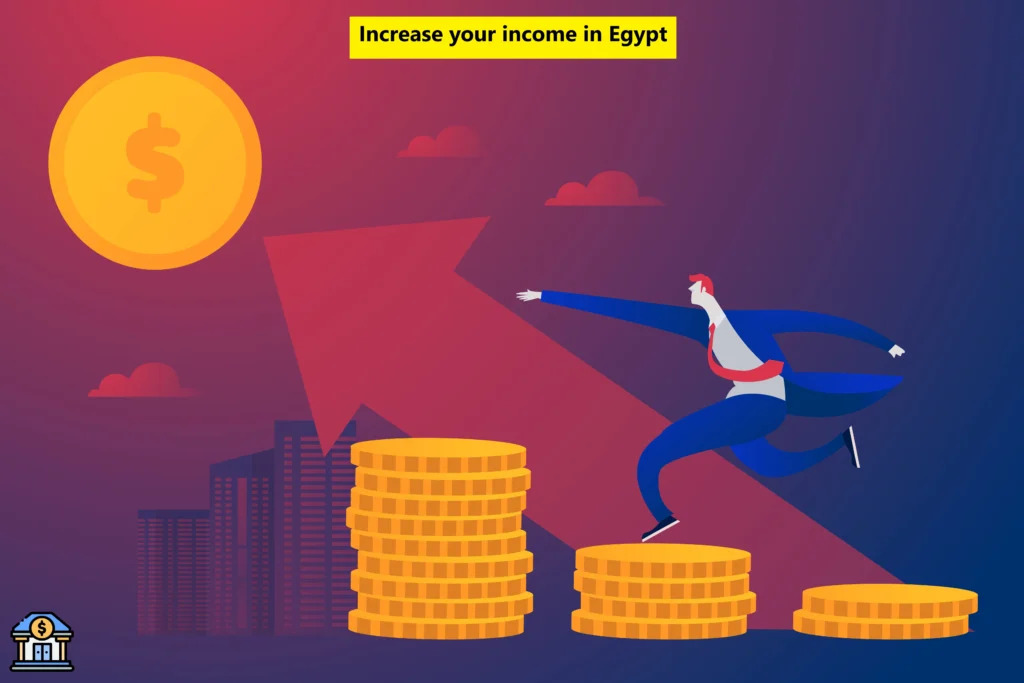
Why One Salary Is No Longer Enough in Egypt
If you had asked me a few years ago whether one stable salary was enough to build a comfortable life, I probably would have said yes. Today, I wouldn’t give the same answer. After talking to friends, colleagues, and freelancers—and managing my own budget more carefully—I realized that relying on a single paycheck has become increasingly difficult. The challenge isn’t just about earning more money; it’s about protecting your financial future.
One of the biggest reasons is inflation. Everyday essentials such as groceries, transportation, utilities, and healthcare tend to cost more over time. Even when salaries increase, they often struggle to keep pace with the rising cost of living. I remember reviewing my monthly expenses and being surprised that I wasn’t spending more on luxury items—I was simply paying more for the same necessities.
اقرأ أيضًا

Currency depreciation has added another layer of uncertainty. Products that depend on imports, digital subscriptions, electronics, and many business supplies become more expensive when exchange rates change. That reality has encouraged many people to look beyond traditional employment and search for extra income opportunities that can help protect their purchasing power.
At first, I made the mistake of believing that working harder at my full-time job was the only solution. Eventually, I realized that increasing my working hours had limits. What made a real difference was focusing on creating multiple income streams instead of depending entirely on one employer.
Practical Ways to Diversify Your Income
Some of the most practical options include:
- Freelancing in writing, design, programming, or translation.
- Starting an online business selling digital or physical products.
- Online tutoring or coaching in subjects you already know.
- Affiliate marketing or content creation.
- Investing gradually in suitable financial assets after building sufficient knowledge.
As Warren Buffett famously said:
“Never depend on a single income. Make an investment to create a second source.”
That quote completely changed how I approached money management. Rather than chasing quick wins, I began thinking about long-term stability.
The Importance of Financial Planning
This is where financial planning becomes essential. A good financial plan is not just about cutting expenses—it is about intentionally increasing your earning potential while managing risk. Every new skill you learn, every small investment you make, and every additional source of income strengthens your financial foundation.
If your goal is to increase your income in Egypt, don’t think of it as replacing your current job. Instead, think of it as building layers of financial security. Many successful people combine a full-time career with Side hustles in Egypt, make money online in Egypt opportunities, or Small investments in Egypt that generate consistent returns over time.
Financial security rarely comes from a single breakthrough. In my experience, it grows from consistent decisions made month after month. Whether your objective is earning Extra income in Egypt, achieving Financial freedom in Egypt, or simply creating enough breathing room to handle unexpected expenses, diversifying your income is no longer just a smart financial strategy—it has become one of the most practical ways to build long-term stability and resilience.
Best Side Hustles in Egypt
Finding reliable Side hustles in Egypt has become one of the smartest financial decisions anyone can make. I used to think earning more money meant working overtime or finding a second traditional job. After experimenting with different opportunities, I realized that the internet has completely changed the way people generate income. Today, thousands of Egyptians earn extra money through Freelancing, Remote work, digital businesses, and AI-powered services without leaving their homes.
The biggest lesson I learned is that not every side hustle is suitable for everyone. Some require creative skills, while others depend more on communication, organization, or technical knowledge. The good news is that most of these opportunities have a low startup cost, allowing beginners to start small and grow over time.
1. Freelancing
Freelancing remains one of the most profitable and flexible Side hustles in Egypt. Instead of working for one employer, freelancers provide services to clients worldwide and often earn in USD, EUR, or GBP, making it an attractive option during periods of currency fluctuations.
- Required Skills: Communication, time management, and one marketable skill.
- Startup Cost: Very low (Laptop + Internet).
- Time Commitment: 10–40 hours weekly.
- Monthly Earning Potential: $200–$3,000+ depending on experience.
- Difficulty Level: Medium.
- Best Platforms: Upwork, Fiverr, Freelancer, PeoplePerHour.
2. Social Media Management
Many small businesses struggle to manage their Facebook, Instagram, TikTok, and LinkedIn accounts consistently. That’s where social media managers come in. I once helped a local business schedule content only a few hours each week, and it quickly became a recurring monthly income.
- Required Skills: Social media marketing, Canva, scheduling tools.
- Startup Cost: Low.
- Time Commitment: 8–25 hours weekly.
- Monthly Earning Potential: $250–$2,000.
- Difficulty Level: Medium.
- Best Platforms: LinkedIn, Upwork, Facebook Groups.
3. Graphic Design
Graphic design is one of the fastest-growing opportunities for Remote work. Businesses constantly need logos, social media graphics, presentations, and marketing materials.
- Required Skills: Canva, Adobe Illustrator, Photoshop.
- Startup Cost: Low to Medium.
- Time Commitment: Flexible.
- Monthly Earning Potential: $300–$4,000.
- Difficulty Level: Medium.
- Best Platforms: Fiverr, Upwork, Behance.
4. Content Writing
Content writing is an excellent choice if you enjoy research and writing. SEO articles, blogs, website copy, and product descriptions are always in demand. Developing expertise in AI-assisted writing can further increase productivity while maintaining high-quality work.
- Required Skills: Writing, SEO, research.
- Startup Cost: Very Low.
- Time Commitment: Flexible.
- Monthly Earning Potential: $250–$3,500.
- Difficulty Level: Medium.
- Best Platforms: Upwork, Fiverr, ProBlogger.
5. Translation
Bilingual professionals have a major advantage. English-Arabic translation continues to be one of the strongest freelance services, especially for legal, technical, and business documents.
- Required Skills: Excellent language proficiency.
- Startup Cost: Very Low.
- Time Commitment: Flexible.
- Monthly Earning Potential: $300–$3,000.
- Difficulty Level: Medium to High.
- Best Platforms: ProZ, Upwork, Freelancer.
6. Video Editing
The explosion of YouTube, TikTok, podcasts, and online courses has created huge demand for skilled video editors. Content creators constantly outsource editing to save time.
- Required Skills: Premiere Pro, DaVinci Resolve, CapCut.
- Startup Cost: Medium.
- Time Commitment: Project-based.
- Monthly Earning Potential: $400–$5,000.
- Difficulty Level: High.
- Best Platforms: Upwork, Fiverr, LinkedIn.
7. Virtual Assistance
Virtual assistants help entrepreneurs with scheduling, email management, research, customer support, and administrative work. It is one of the easiest entry points into Remote work.
- Required Skills: Organization, Microsoft Office, Google Workspace.
- Startup Cost: Very Low.
- Time Commitment: 10–30 hours weekly.
- Monthly Earning Potential: $300–$2,500.
- Difficulty Level: Easy to Medium.
- Best Platforms: Upwork, OnlineJobs, Belay.
8. Online Tutoring
If you are skilled in languages, mathematics, science, or programming, online tutoring offers a rewarding income source. Many tutors teach students worldwide through video calls without leaving home.
- Required Skills: Subject expertise and communication.
- Startup Cost: Very Low.
- Time Commitment: Flexible.
- Monthly Earning Potential: $300–$3,000.
- Difficulty Level: Medium.
- Best Platforms: Preply, Cambly, TutorOcean.
9. Photography
Photography isn’t limited to weddings anymore. Businesses, online stores, and stock photo websites constantly need fresh images. Selling photos online can even generate passive income over time.
- Required Skills: Photography, editing, composition.
- Startup Cost: Medium to High.
- Time Commitment: Flexible.
- Monthly Earning Potential: $200–$4,000.
- Difficulty Level: Medium.
- Best Platforms: Shutterstock, Adobe Stock, Fiverr.
10. AI Prompt Engineering
One of the newest opportunities is AI Prompt Engineering. Companies increasingly need professionals who know how to communicate effectively with AI tools like ChatGPT to generate high-quality content, automate workflows, improve customer support, and increase productivity.
Although the field is still developing, professionals who combine AI knowledge with writing, marketing, programming, or business operations are becoming highly valuable.
- Required Skills: AI tools, prompt writing, problem-solving, critical thinking.
- Startup Cost: Very Low.
- Time Commitment: Flexible.
- Monthly Earning Potential: $500–$5,000+.
- Difficulty Level: Medium.
- Best Platforms: Upwork, Fiverr, LinkedIn, Contra.
How to Start a Side Hustle Without Quitting Your 9-to-5: My Strategy
When I first started looking for ways to earn extra income, I assumed I had two choices: quit my full-time job or accept that I’d never have enough time to build something on the side. Thankfully, I was wrong. Instead of making a risky leap, I focused on building my side hustle gradually while keeping the financial security of my 9-to-5. That decision removed a lot of pressure and allowed me to experiment without worrying about paying the bills.
My strategy was surprisingly simple. I treated my full-time job as the investment that funded my future business. Every evening, I dedicated one or two focused hours to learning a valuable skill, improving my portfolio, or finding new clients. Progress felt slow at first, but those small daily efforts added up much faster than I expected.
Here’s the approach that worked best for me:
- Choose one high-income skill instead of trying to learn everything.
- Create a realistic weekly schedule that fits around your full-time job.
- Build a small portfolio before looking for clients.
- Accept small freelance projects to gain experience and reviews.
- Reinvest part of your earnings into better tools, education, or marketing.
- Only consider leaving your full-time job after your side hustle consistently covers your monthly expenses.
One lesson I learned early was that consistency beats intensity. Working 90 minutes every evening for several months produced better results than spending an entire weekend working and then doing nothing for the next two weeks.
I also avoided one common mistake: saying yes to every opportunity. Instead, I focused on one service, improved my skills, and gradually increased my rates as I gained experience. That made managing both my job and my side hustle much less stressful.
If you’re thinking about starting your own side hustle, don’t wait for the “perfect” time. Keep your full-time income, start small, learn continuously, and build your business step by step. A successful side hustle isn’t created overnight—it’s built through consistent action, smart planning, and patience.
How to Choose the Right Side Hustle
After trying several online income methods, I discovered that choosing the “best” opportunity depends more on your existing skills than on trends. Chasing every new opportunity usually leads to frustration, while mastering one valuable skill often produces better long-term results.
Before getting started, ask yourself these questions:
- Do I prefer creative work or analytical tasks?
- How many hours can I realistically dedicate each week?
- Do I want quick income or long-term passive income?
- Can this skill grow into a full-time business?
The most successful people rarely rely on just one source of income. Instead, they gradually combine Freelancing, Remote work, investments, digital products, and online businesses to build financial stability. If your goal is to create sustainable wealth, starting with one of these Side hustles in Egypt could be the first step toward greater financial freedom.
Best Ways to Make Money Online in Egypt
If someone had told me a few years ago that people in Egypt could build a full-time income using nothing more than a laptop and an internet connection, I probably would have been skeptical. Today, that idea is no longer unrealistic. Thousands of Egyptians earn money every month through digital businesses, freelancing, content creation, and online entrepreneurship. The best part is that many of these methods can eventually generate Passive income, allowing you to earn even while you’re sleeping.
If your goal is to make money online in Egypt, the secret isn’t finding a magic formula. It’s choosing one proven business model, mastering it, and staying consistent long enough to see results. Below are some of the best online business opportunities available today.
1. Affiliate Marketing
Affiliate marketing allows you to earn commissions by recommending products or services. Whenever someone purchases through your referral link, you receive a percentage of the sale.
This is one of my favorite online business models because you don’t have to create your own products or deal with customer support.
Pros
- Very low startup cost.
- Excellent source of Passive income.
- No inventory or shipping.
- Can be combined with blogging or YouTube.
Cons
- Requires patience before seeing results.
- Income depends on traffic.
- Commission rates vary.
Startup Cost: $0–$100
Income Potential: $100–$10,000+ monthly.
Recommended Tools:
- ChatGPT
- Canva
- WordPress
- Google Analytics
- Pretty Links
2. Blogging
Blogging remains one of the most sustainable ways to make money online in Egypt. While it takes time to build traffic, a successful blog can generate income through affiliate marketing, advertising, sponsored content, and digital product sales.
Pros
- Long-term asset.
- Highly scalable.
- Multiple monetization methods.
- Can generate recurring passive traffic.
Cons
- SEO requires patience.
- Content creation is time-consuming.
- Results are rarely immediate.
Startup Cost: $50–$200.
Income Potential: $300–$20,000+ monthly.
Recommended Tools:
- WordPress
- Rank Math SEO
- ChatGPT
- Canva
- Google Search Console
3. YouTube
Video content continues to dominate online consumption. YouTube allows creators to earn from advertising revenue, sponsorships, affiliate marketing, memberships, and digital product sales.
Although creating videos requires effort initially, older videos can continue generating views for years, making YouTube an excellent source of Passive income.
Pros
- Multiple income streams.
- Global audience.
- Excellent long-term earning potential.
Cons
- Video production takes time.
- Requires consistency.
- Competition is high.
Startup Cost: $0–$500.
Income Potential: $200–$50,000+ monthly.
Recommended Tools:
- CapCut
- DaVinci Resolve
- Canva
- TubeBuddy
- ChatGPT
4. TikTok Creator Programs
TikTok has evolved beyond entertainment. Today, creators earn through brand partnerships, affiliate marketing, live gifts, and Creator Rewards programs where available.
Pros
- Fast audience growth.
- Short-form content.
- Ideal for personal branding.
Cons
- Income depends heavily on engagement.
- Platform algorithms change frequently.
Startup Cost: Almost free.
Income Potential: $100–$20,000+ monthly.
Recommended Tools:
- CapCut
- Canva
- ChatGPT
- TikTok Analytics
5. Selling Digital Products
Selling digital products is one of the highest-margin online businesses available today. Once you create the product once, you can sell it repeatedly without additional production costs.
Examples include:
- E-books
- Templates
- Canva designs
- Notion templates
- Printables
- Spreadsheets
Pros
- Excellent Passive income.
- No inventory.
- High profit margins.
Cons
- Requires marketing.
- Competition exists.
Startup Cost: $0–$100.
Income Potential: Unlimited.
Recommended Tools:
- Canva
- Gumroad
- Payhip
- ChatGPT
- Notion
6. Print-on-Demand
Print-on-demand lets you sell custom-designed products without holding inventory. A supplier prints and ships products only after customers place orders.
Pros
- No inventory.
- Low financial risk.
- Easy to scale.
Cons
- Lower profit margins.
- Highly competitive.
Startup Cost: $50–$300.
Income Potential: $300–$15,000+ monthly.
Recommended Tools:
- Printify
- Printful
- Canva
- Shopify
7. Dropshipping
Dropshipping allows you to operate an online store without storing products. Suppliers handle inventory and shipping while you focus on marketing and customer acquisition.
Pros
- Low startup investment.
- Large product selection.
- Scalable business model.
Cons
- Lower profit margins.
- Customer service challenges.
- Supplier dependency.
Startup Cost: $100–$500.
Income Potential: $500–$30,000+ monthly.
Recommended Tools:
- Shopify
- DSers
- AutoDS
- Canva
- Meta Ads Manager
8. Online Coaching
If you have expertise in fitness, business, marketing, languages, finance, or personal development, online coaching allows you to monetize your knowledge through one-on-one sessions or group coaching.
Pros
- High hourly rates.
- Builds personal brand.
- Can evolve into courses.
Cons
- Requires credibility.
- Income depends on client acquisition.
Startup Cost: Under $100.
Income Potential: $500–$10,000+ monthly.
Recommended Tools:
- Zoom
- Calendly
- Google Meet
- Notion
9. Creating Online Courses
Online education continues to grow every year. Once you’ve developed expertise in a specific subject, you can package your knowledge into an online course and sell it repeatedly, making it one of the strongest Passive income opportunities available.
Pros
- Scalable.
- Excellent passive income potential.
- Builds authority.
Cons
- High initial effort.
- Requires marketing.
- Needs regular updates.
Startup Cost: $100–$500.
Income Potential: $500–$50,000+ monthly.
Recommended Tools:
- Teachable
- Thinkific
- Kajabi
- Canva
- ChatGPT
Which Online Business Should You Choose?
If you’re just getting started, don’t try to build five businesses at once. That’s one of the biggest mistakes beginners make. Instead, choose one model that matches your strengths, dedicate several months to learning it, and focus on building consistent results.
For example, if you enjoy writing, blogging combined with affiliate marketing may be the perfect combination. If you’re comfortable on camera, YouTube or TikTok could accelerate your growth. Creative individuals may find print-on-demand or selling digital products more rewarding, while professionals with specialized knowledge can build highly profitable coaching or online course businesses.
The best strategy to make money online in Egypt isn’t choosing the trendiest business model—it’s selecting one that fits your skills, committing to continuous improvement, and gradually combining multiple income streams. Over time, these digital assets can grow into a profitable Online business that generates recurring Passive income and provides greater financial independence.
Best Remote Jobs That Pay in USD
The popularity of Remote jobs has exploded over the last few years, and it’s easy to understand why. Instead of limiting yourself to local salaries, you can work for international companies and earn in USD, EUR, or GBP while living in Egypt. For many professionals, this has become one of the fastest ways to increase their purchasing power and achieve greater financial stability.
I used to believe that remote work was reserved for software engineers. After researching the market and speaking with people working online, I realized companies hire remotely for dozens of positions that require completely different skill sets. Whether you’re creative, analytical, organized, or technical, there are excellent Online jobs available if you’re willing to develop the right skills.
1. Customer Support Specialist
Customer support is one of the easiest remote careers for beginners. International companies hire support agents to answer emails, live chats, and customer inquiries while working from home.
- Required Skills: English communication, patience, problem-solving.
- Average Salary: $700–$2,500 per month.
- Difficulty: Easy.
- Best For: Beginners entering Remote jobs.
2. Software Development
Software developers remain among the highest-paid remote professionals worldwide. Whether you specialize in web development, mobile applications, or backend systems, experienced developers are in constant demand.
- Required Skills: JavaScript, Python, React, Node.js, Java, C#, Git.
- Average Salary: $2,000–$8,000+ monthly.
- Difficulty: High.
- Best For: Long-term career growth.
3. SEO Specialist
Search Engine Optimization (SEO) helps businesses rank higher on Google and attract organic traffic. Since every online business wants more visitors, SEO professionals are consistently in demand.
- Required Skills: Keyword research, on-page SEO, technical SEO, analytics.
- Average Salary: $1,000–$5,000 monthly.
- Difficulty: Medium.
- Best For: People interested in digital marketing.
4. Copywriting
Copywriters create persuasive content that encourages readers to take action, whether purchasing a product, subscribing to a newsletter, or booking a consultation. Businesses invest heavily in quality copy because it directly impacts sales.
- Required Skills: Sales psychology, writing, marketing.
- Average Salary: $1,000–$6,000 monthly.
- Difficulty: Medium.
- Best For: Strong writers with marketing interests.
5. Data Analyst
Companies collect enormous amounts of information every day, but they need analysts who can transform data into useful business insights. Data analysis is one of the fastest-growing remote careers globally.
- Required Skills: Excel, SQL, Power BI, Tableau, Python.
- Average Salary: $1,500–$6,500 monthly.
- Difficulty: Medium to High.
- Best For: Analytical thinkers.
6. Digital Marketing Specialist
Digital marketing combines creativity with data. Professionals manage paid advertising campaigns, email marketing, content strategies, and customer acquisition for businesses around the world.
- Required Skills: Google Ads, Meta Ads, analytics, content marketing.
- Average Salary: $1,200–$5,000 monthly.
- Difficulty: Medium.
- Best For: Creative professionals who enjoy strategy.
7. UX/UI Designer
User Experience (UX) and User Interface (UI) designers create digital products that are both attractive and easy to use. As more companies invest in websites and mobile apps, demand for skilled designers continues to grow.
- Required Skills: Figma, Adobe XD, design systems, prototyping.
- Average Salary: $2,000–$7,000 monthly.
- Difficulty: Medium to High.
- Best For: Creative problem solvers.
8. Project Manager
Project managers coordinate teams, monitor deadlines, communicate with clients, and ensure projects are completed successfully. Strong leadership and organization skills are essential for this role.
- Required Skills: Leadership, Agile, Scrum, communication, planning.
- Average Salary: $2,000–$8,000 monthly.
- Difficulty: High.
- Best For: Experienced professionals with management skills.
Best Websites to Find Remote Jobs
Finding legitimate Remote jobs starts with using trusted hiring platforms. These websites connect professionals with companies worldwide and frequently list positions that allow employees to earn in USD.
- LinkedIn Jobs
- Upwork
- Toptal
- We Work Remotely
- Remote OK
- Wellfound (formerly AngelList)
- FlexJobs
- Indeed
- PeoplePerHour
- Fiverr (for freelancers)
How Egyptians Can Receive Payments
One question almost every beginner asks is how to receive international payments while living in Egypt. Fortunately, several reliable payment methods are available depending on your client or employer.
- Payoneer – One of the most widely accepted payment solutions for freelancers.
- Wise – Offers international transfers with competitive exchange rates where available.
- Bank Wire Transfer (SWIFT) – Suitable for larger payments from international companies.
- Elevate – Provides virtual USD accounts for eligible users and simplifies receiving international payments.
- Paysend and similar transfer services – Used by some employers depending on the country.
Before choosing a payment method, compare transfer fees, currency conversion costs, withdrawal options, and processing times. These factors can significantly affect your final earnings over the long term.
Tips for Landing High-Paying Remote Jobs
The biggest mistake I see beginners make is applying for hundreds of positions with the same generic resume. International employers receive thousands of applications, so standing out requires preparation.
- Build a professional LinkedIn profile.
- Create a portfolio showcasing real projects.
- Customize your CV for every application.
- Improve your English communication skills.
- Earn certifications relevant to your field.
- Practice remote interview skills.
- Apply consistently instead of relying on a single application.
The demand for Online jobs continues to grow as companies embrace distributed teams and hire talent from around the world. Whether your background is in technology, marketing, design, customer service, or management, developing an in-demand skill can help you secure Remote jobs that allow you to earn in USD while enjoying the flexibility of working from anywhere in Egypt.
Smart Small Investments in Egypt
Saving money is an important first step, but saving alone rarely builds wealth. I learned this after leaving part of my savings untouched for months and realizing that inflation was slowly reducing its purchasing power. That’s when I started researching Small investments in Egypt that could help preserve and grow my money without requiring a huge amount of capital.
One thing quickly became clear: there isn’t a single “best” investment for everyone. The right choice depends on your financial goals, risk tolerance, investment horizon, and how quickly you might need access to your money. Fortunately, Egypt offers several excellent Investment opportunities for beginners and experienced investors alike.
1. Gold Investment
Gold investment has long been considered one of the safest ways to preserve wealth during periods of inflation and currency depreciation. While gold prices fluctuate in the short term, many investors use it as a long-term hedge rather than a quick profit opportunity.
- Minimum Capital: The price of one gram of gold.
- Expected Returns: Moderate over the long term, depending on market conditions.
- Risk Level: Low to Medium.
- Liquidity: High.
- Best Suited For: Conservative investors seeking wealth preservation.
Physical gold bars and coins are popular choices because they typically have lower manufacturing premiums than jewelry.
2. Mutual Funds
Mutual funds allow investors to pool their money into professionally managed portfolios containing stocks, bonds, or other assets. They’re ideal for people who prefer diversification without selecting individual investments themselves.
- Minimum Capital: Often starts from a relatively small amount depending on the fund.
- Expected Returns: Moderate to High over the long term.
- Risk Level: Medium.
- Liquidity: Medium to High, depending on the fund.
- Best Suited For: Beginners seeking diversified investments.
3. Egyptian Stocks
Buying shares in companies listed on the Egyptian Exchange allows investors to participate in business growth while potentially earning capital gains and dividends. Stock investing generally requires patience and a long-term mindset.
- Minimum Capital: Very flexible depending on the share price.
- Expected Returns: High potential with market fluctuations.
- Risk Level: Medium to High.
- Liquidity: High for actively traded shares.
- Best Suited For: Investors willing to tolerate market volatility.
Diversifying across several sectors instead of buying only one company’s shares can reduce investment risk.
4. Exchange-Traded Funds (ETFs)
ETFs combine the diversification benefits of mutual funds with the flexibility of trading like individual stocks. They provide exposure to multiple companies or market indexes through a single investment.
- Minimum Capital: The cost of one ETF unit.
- Expected Returns: Moderate to High.
- Risk Level: Medium.
- Liquidity: High.
- Best Suited For: Investors seeking broad market diversification.
5. High-Yield Savings Accounts
Although they generally don’t deliver the highest returns, high-yield savings accounts provide stability, liquidity, and peace of mind. They are especially useful for building an emergency fund before investing in higher-risk assets.
- Minimum Capital: Usually very low.
- Expected Returns: Fixed interest depending on the bank.
- Risk Level: Very Low.
- Liquidity: Very High.
- Best Suited For: Short-term savings and emergency funds.
6. Certificates of Deposit (CDs)
Certificates of Deposit offer a predetermined interest rate for a fixed investment period. They are popular among conservative investors who prioritize predictable returns over higher growth potential.
- Minimum Capital: Depends on the issuing bank.
- Expected Returns: Fixed according to the certificate terms.
- Risk Level: Low.
- Liquidity: Low to Medium, as early withdrawals may involve penalties.
- Best Suited For: Investors seeking stable and predictable income.
7. Real Estate Investment Funds
Real estate funds provide exposure to property investments without purchasing an apartment, office, or commercial building directly. They allow investors to benefit from the real estate market while investing significantly less capital.
- Minimum Capital: Generally much lower than purchasing physical property.
- Expected Returns: Moderate.
- Risk Level: Medium.
- Liquidity: Medium.
- Best Suited For: Investors wanting real estate exposure without direct property ownership.
8. Small Businesses
Investing in a small business can potentially produce the highest returns, but it also carries the greatest level of risk. Whether launching your own venture or investing in an existing business, success depends heavily on planning, market demand, and execution.
- Minimum Capital: Varies widely depending on the business model.
- Expected Returns: Potentially very high.
- Risk Level: High.
- Liquidity: Low.
- Best Suited For: Entrepreneurs willing to actively manage their investment.
How to Choose the Right Investment
One mistake I nearly made was putting all my savings into a single investment simply because it was popular. Fortunately, I learned that diversification is one of the most effective ways to reduce financial risk. Different investments behave differently during changing market conditions, which helps balance your portfolio over time.
Before investing, consider the following questions:
- What is my investment goal?
- How much risk am I comfortable taking?
- Will I need this money in the near future?
- Do I prefer stable returns or higher growth potential?
- Am I investing for five years, ten years, or longer?
Building a Balanced Investment Portfolio
Successful investors rarely rely on just one asset class. Instead, they combine several Investment opportunities to create a balanced portfolio that matches their financial objectives. For example, someone might allocate part of their savings to gold investments for stability, another portion to mutual funds or ETFs for long-term growth, and maintain a high-yield savings account for emergencies.
The most important lesson I’ve learned is that investing isn’t about finding the perfect asset—it’s about developing a consistent habit. Starting early with Small investments in Egypt, even with modest amounts, allows compound growth to work over time. Combined with smart financial planning and regular contributions, these investments can become an essential part of building long-term financial security and independence.
Using AI to Increase Your Income
Artificial intelligence is no longer a technology reserved for large corporations or software engineers. Today, anyone with a computer and an internet connection can use AI tools to work faster, improve the quality of their work, and even create entirely new income streams. I used to think AI would replace jobs, but after spending time learning how to use it effectively, I realized something important: AI doesn’t replace skilled people—it makes skilled people significantly more productive.
If your goal is to earn more money, learning how to use ChatGPT and other AI-powered platforms may be one of the highest-return skills you can develop today. Instead of viewing AI as competition, think of it as a powerful assistant that helps you complete tasks in less time while increasing the value you provide to clients or employers.
1. ChatGPT for Freelancing
ChatGPT has become one of the most versatile AI assistants available. It can help freelancers brainstorm ideas, draft articles, write marketing copy, generate business proposals, summarize research, create email sequences, and even explain complex topics.
For example, a content writer can use ChatGPT to generate outlines, overcome writer’s block, and organize information before adding personal expertise and editing the final article. This approach dramatically reduces production time without sacrificing quality.
- Monetization Ideas: Content writing, copywriting, email marketing, resume writing, script writing.
- Required Skills: Prompt writing, editing, critical thinking.
- Income Potential: $300–$5,000+ per month.
2. AI Content Creation
Businesses publish enormous amounts of content every day across blogs, newsletters, websites, and social media. AI makes creating this content much faster while allowing creators to focus on strategy and originality.
Many entrepreneurs now offer AI-assisted content services, combining human expertise with automation to deliver faster turnaround times to clients.
- Examples:
- SEO blog writing
- Social media captions
- Product descriptions
- Email newsletters
- YouTube scripts
The key is remembering that AI should support your work, not replace human editing, fact-checking, or creativity.
3. AI Marketing
Digital marketers increasingly rely on AI to improve advertising campaigns, analyze customer behavior, generate marketing ideas, and personalize content for different audiences.
Instead of spending hours brainstorming campaign concepts, AI can generate multiple variations within minutes, allowing marketers to test different approaches more efficiently.
- Monetization Ideas:
- Marketing consulting
- Facebook Ads management
- Google Ads optimization
- Email marketing services
- Social media strategy
Professionals who combine marketing knowledge with AI tools often deliver better results while serving more clients simultaneously.
4. AI Automation
Automation is one of the most valuable business applications of AI. Instead of performing repetitive tasks manually, businesses use AI-powered workflows to save time and reduce operational costs.
Examples include automatically replying to customer inquiries, organizing spreadsheets, scheduling appointments, summarizing meetings, or generating reports.
- Monetization Ideas:
- Workflow automation consulting
- Business process optimization
- CRM automation
- Customer support automation
Small businesses are increasingly willing to pay specialists who can automate repetitive work and improve efficiency.
5. Coding Assistants
Developers have quickly adopted AI coding assistants to write cleaner code, detect bugs, generate documentation, and explain unfamiliar programming concepts.
Rather than replacing software engineers, these tools allow developers to complete projects more quickly while focusing on solving complex problems.
- Popular Uses:
- Writing code snippets
- Debugging
- Code reviews
- API documentation
- Learning new programming languages
Programmers who effectively combine coding skills with AI often increase both their productivity and earning potential.
6. AI Image Generation
AI image generators have opened new opportunities for designers, marketers, and entrepreneurs. High-quality illustrations, concept art, product mockups, book covers, and social media graphics can now be created much faster than traditional workflows.
Many freelancers sell AI-assisted design services while adding their own editing and creative direction to produce professional results.
- Monetization Ideas:
- Book cover design
- Printable products
- Digital art
- Social media graphics
- Marketing visuals
7. Research Automation
Research often consumes a large portion of any project. AI can summarize long reports, organize information, compare sources, and generate structured outlines that make decision-making much faster.
Researchers, consultants, students, writers, and business analysts increasingly use AI to reduce repetitive research tasks while still verifying important information manually.
- Monetization Ideas:
- Market research
- Business reports
- Competitor analysis
- Academic assistance
- Industry research
8. AI Productivity Tools
One of the biggest financial advantages of AI isn’t creating new income—it’s increasing how much work you can complete in the same number of hours. Better AI productivity means serving more clients, completing projects faster, and reducing time spent on repetitive administrative work.
Some of the most useful AI-powered productivity tasks include:
- Meeting summaries.
- Email drafting.
- Task prioritization.
- Calendar management.
- Document organization.
- Idea generation.
- Workflow planning.
How to Monetize AI Skills
The biggest misconception I hear is that people need to become AI engineers before earning money with artificial intelligence. That’s simply not true. Most profitable opportunities come from combining AI with an existing professional skill rather than relying on AI alone.
Here are several practical ways to monetize AI expertise:
- Offer AI-assisted content writing services.
- Build AI-powered marketing campaigns for businesses.
- Create and sell digital products faster.
- Launch an AI consulting service for small businesses.
- Develop automated workflows for entrepreneurs.
- Create online courses teaching AI skills.
- Sell AI-generated design assets with human refinement.
- Provide prompt engineering services.
Why AI Is a Competitive Advantage
Learning ChatGPT and other AI tools isn’t about replacing human expertise—it’s about multiplying it. Professionals who combine industry knowledge with strong AI productivity skills can complete projects more efficiently, deliver greater value to clients, and often earn significantly more than those relying entirely on manual workflows.
The future belongs to people who know how to collaborate with AI rather than compete against it. By investing time in learning these technologies today, you’ll be better prepared to build new income streams, improve your existing career, and create a more resilient financial future.
Passive Income Ideas That Can Help You Build Long-Term Wealth
For a long time, I believed that earning more money always meant working more hours. Eventually, I realized that wealthy people often focus on something completely different—they build assets that continue generating income long after the initial work is finished. That’s the core idea behind Passive income. While very few income streams are completely effortless, many require significant work upfront and much less maintenance afterward.
If your long-term goal is achieving Financial freedom, creating multiple passive income sources is one of the smartest financial strategies you can adopt. Instead of relying entirely on your salary, these assets gradually begin working for you.
1. Dividend Investing
Dividend investing involves purchasing shares of companies that distribute a portion of their profits to shareholders. As long as you continue holding the shares and the company maintains its dividend policy, you may receive regular payments without selling your investment.
Although dividends are never guaranteed, investing in financially stable companies over the long term can create a reliable source of Passive income.
- Initial Investment: Flexible depending on your budget.
- Maintenance: Low.
- Best For: Long-term investors.
2. Selling Digital Products
Digital products are one of my favorite passive income models because they can be created once and sold repeatedly without worrying about inventory or shipping.
Popular digital products include:
- E-books
- Canva templates
- Notion templates
- Printable planners
- Excel spreadsheets
- Business templates
After publishing your product on a marketplace or your own website, each additional sale requires very little extra effort.
3. YouTube Automation
YouTube automation doesn’t necessarily mean avoiding work. Instead, it involves building systems where scripting, editing, voiceovers, and thumbnail creation can be outsourced while you focus on managing the channel.
Successful channels generate income from advertising, affiliate marketing, sponsorships, memberships, and digital product sales.
- Income Sources:
- Ad revenue
- Affiliate commissions
- Sponsorships
- Digital products
Older videos often continue attracting views for years, making YouTube one of the strongest long-term passive income assets.
4. Online Courses
If you have expertise in a specific field, creating an online course allows you to teach thousands of students without repeating the same lesson every day.
Whether your knowledge involves programming, languages, marketing, finance, photography, or design, online education continues to grow worldwide.
- Advantages:
- High profit margins.
- Scalable.
- Can generate recurring sales.
5. Affiliate Websites
Affiliate websites publish valuable content that helps readers solve problems while recommending relevant products or services. Whenever visitors purchase through affiliate links, the website owner earns a commission.
Although building traffic takes time, successful affiliate websites often generate Passive income for years through evergreen content.
- Best Monetization Methods:
- Affiliate programs.
- Display advertising.
- Sponsored content.
- Email marketing.
6. Rental Income
Rental income remains one of the oldest methods of building wealth. While purchasing real estate requires more capital than many online businesses, renting residential or commercial properties can generate consistent monthly cash flow.
For investors who prefer not to manage properties directly, real estate investment funds may provide indirect exposure to the property market with lower capital requirements.
- Best For: Long-term investors.
- Maintenance: Medium depending on property management.
7. Licensing Your Content
Many creators overlook content licensing as a passive income opportunity. Photographs, illustrations, videos, music, software, templates, and educational materials can all be licensed to businesses or individuals.
Instead of selling the asset once, licensing allows you to earn recurring revenue whenever someone pays for permission to use your work.
- Examples:
- Stock photography.
- Music licensing.
- Video footage.
- Software licenses.
- Design templates.
How to Build Passive Income Successfully
One mistake I almost made was trying to build several passive income streams simultaneously. In reality, most successful investors and entrepreneurs begin with one asset, improve it consistently, and then expand into additional opportunities.
A practical roadmap might look like this:
- Develop one valuable skill.
- Create your first digital asset or investment.
- Reinvest part of your earnings.
- Add a second passive income source.
- Continue diversifying over time.
The Path to Financial Freedom
True Financial freedom rarely comes from a single breakthrough. Instead, it results from steadily building assets that generate recurring income over many years. Whether you choose dividend investing, digital products, affiliate websites, online courses, rental properties, or licensed content, every successful asset you create brings you one step closer to greater financial independence.
The earlier you begin building Passive income, the more time your investments, content, and digital assets have to grow. Consistency, patience, and continuous learning remain far more valuable than chasing quick profits, and they are ultimately what separate temporary income from lasting wealth.
Common Mistakes to Avoid When Building Multiple Income Streams
Learning how to increase your income is exciting, but it’s surprisingly easy to make expensive mistakes along the way. I certainly made a few myself. At one point, I spent too much time chasing the “next big opportunity” instead of mastering one proven strategy. Looking back, I realized that building wealth isn’t about moving faster than everyone else—it’s about making smarter financial decisions consistently.
Whether you’re starting a side hustle, investing your savings, or launching an online business, avoiding these common mistakes can save you both money and frustration.
1. Chasing Quick-Money Schemes
Whenever I see advertisements promising guaranteed profits with little effort, I become skeptical. In most cases, if an opportunity sounds too good to be true, it probably is.
Many beginners lose money because they focus on unrealistic promises instead of developing valuable skills. Sustainable wealth usually comes from consistent effort, patience, and continuous learning—not overnight success.
Instead of looking for shortcuts, invest your time in building skills that remain valuable for years.
2. Investing Without Doing Proper Research
One of the biggest financial mistakes is investing simply because someone on social media recommended an asset. Every investment carries different levels of Investment risks, and understanding those risks should always come before investing your money.
Before making any investment, ask yourself:
- How does this investment generate returns?
- What are the potential risks?
- What is my investment timeframe?
- Can I afford temporary losses?
- Is the information coming from reliable sources?
A few hours of research today can prevent costly mistakes tomorrow.
3. Ignoring Taxes and Local Regulations
Many people focus only on earning money while forgetting that taxes, licensing requirements, and local regulations may also apply depending on the type of business or investment they choose.
If you begin working with international clients, selling digital products, or running an online business, take time to understand the legal and financial responsibilities that may affect your income. Staying organized from the beginning is much easier than solving compliance problems later.
4. Neglecting Financial Planning
Earning more money doesn’t automatically improve your financial situation. Without proper Financial planning, it’s surprisingly easy to increase spending at the same pace as your income.
One habit that helped me significantly was separating income into clear categories:
- Living expenses.
- Emergency savings.
- Investments.
- Business growth.
- Personal spending.
This simple structure makes it much easier to manage cash flow while steadily building long-term wealth.
5. Overestimating Your Future Earnings
Many beginners calculate future income using the best possible scenario instead of realistic expectations. Unfortunately, online businesses, freelancing, and investing all involve periods of slower growth.
A healthier approach is to create conservative financial projections and treat unexpected earnings as bonuses rather than guarantees. This reduces financial pressure and helps you make better long-term decisions.
6. Poor Time Management
Time is often a bigger limitation than money. Early on, I tried juggling too many projects at once and ended up making very little progress on any of them.
Focusing on one priority at a time usually produces better results than constantly switching between unfinished tasks.
Some simple productivity habits include:
- Prioritize high-value work first.
- Set weekly financial goals.
- Avoid multitasking whenever possible.
- Use calendars and task management tools.
- Review your progress every month.
Build Wealth by Avoiding Costly Mistakes
Success isn’t determined only by the opportunities you choose—it’s also shaped by the mistakes you avoid. Staying away from unrealistic promises, understanding Investment risks, practicing responsible Financial planning, managing your time effectively, and making informed financial decisions will put you in a much stronger position than constantly chasing shortcuts.
Building lasting financial security takes patience, discipline, and continuous improvement. Every smart decision you make today creates a stronger financial foundation for tomorrow, allowing your income, investments, and business opportunities to grow steadily over time.
90-Day Action Plan to Increase Your Income
One of the biggest reasons people fail to improve their finances isn’t a lack of opportunities—it’s a lack of execution. I’ve seen many people spend months researching side hustles, investing, and online businesses without taking meaningful action. I almost fell into the same trap until I realized that consistent progress beats perfect planning every time.
The following 90-day roadmap is designed to help you move from learning to earning. You don’t need to master everything at once. Focus on completing each month’s goals before moving to the next stage.
Month 1: Build Your Foundation
The first month is all about developing valuable skills and preparing yourself for future opportunities. Don’t worry about making a lot of money immediately. Instead, invest your time in becoming someone businesses are willing to pay.
Step 1: Learn a High-Income Skill
Choose one skill based on your interests and current strengths. Avoid trying to learn several skills at the same time.
Popular beginner-friendly options include:
- Content Writing
- Graphic Design
- Social Media Management
- SEO
- Video Editing
- Virtual Assistance
- AI Prompt Engineering
- Digital Marketing
Dedicate at least one to two hours every day to learning through online courses, tutorials, and practical projects.
Step 2: Build Your Portfolio
Clients rarely hire people based only on certificates. They want proof that you can solve real problems.
Create several sample projects such as:
- Blog articles.
- Social media campaigns.
- Logo designs.
- Landing pages.
- Marketing strategies.
- SEO audits.
Even personal projects demonstrate your abilities and provide material for future job applications.
Step 3: Open Freelance Accounts
Create professional profiles on multiple freelance marketplaces to maximize your exposure.
- Upwork
- Fiverr
- PeoplePerHour
- Freelancer
Use a professional photo, write a clear profile description, highlight your skills, and upload portfolio samples before submitting proposals.
Month 2: Start Earning
Once your foundation is ready, the second month focuses on securing your first clients and beginning your financial journey.
Step 1: Get Your First Clients
Don’t expect your first proposal to succeed immediately. Many freelancers send dozens of personalized applications before landing their first project.
Increase your chances by:
- Customizing every proposal.
- Explaining how you’ll solve the client’s problem.
- Responding quickly to messages.
- Delivering excellent work.
- Requesting client reviews after successful projects.
Step 2: Save Your Initial Capital
As your income begins to grow, resist the temptation to spend everything you earn. Building an emergency fund should become one of your highest financial priorities.
Aim to save a fixed percentage of every payment before spending the remaining balance.
Step 3: Start Investing
Once you’ve established emergency savings, begin investing gradually instead of waiting until you have a large amount of money.
Depending on your financial goals, consider:
- Gold.
- Mutual funds.
- ETFs.
- Dividend-paying stocks.
- Certificates of Deposit.
Consistency usually produces better long-term results than trying to perfectly time the market.
Month 3: Scale and Diversify
By the third month, you’ve built valuable skills, earned your first income, and started investing. Now it’s time to strengthen your financial position by expanding your income sources.
Step 1: Diversify Your Income
Avoid depending on a single client or one income stream. Diversification reduces financial risk and creates greater long-term stability.
Consider adding:
- Affiliate marketing.
- Digital products.
- Blogging.
- YouTube.
- Online courses.
- Consulting.
Step 2: Automate Repetitive Tasks
As your workload grows, automation becomes increasingly valuable. Instead of repeating the same administrative tasks every day, use technology to save time.
Automation examples include:
- Scheduling social media posts.
- Using AI for research and drafting.
- Email automation.
- Invoice generation.
- Project management tools.
- Calendar scheduling.
The goal isn’t to replace your work—it’s to spend more time on high-value activities that generate income.
Step 3: Scale What Works
One of the biggest lessons I’ve learned is not to chase every new opportunity. Instead, analyze your results and double down on the strategies producing the highest return.
Ask yourself:
- Which service earns the most profit?
- Which clients are the easiest to work with?
- Which marketing channel generates the best leads?
- What tasks should I outsource?
- What can I automate?
Your First 90 Days Can Change Your Financial Future
Improving your financial situation doesn’t require a dramatic overnight transformation. It comes from taking small, consistent actions every week. By spending the first month learning valuable skills, the second month generating income and investing wisely, and the third month expanding and optimizing your efforts, you’ll build a strong foundation for long-term financial growth.
Remember that every successful entrepreneur, freelancer, and investor started as a beginner. Stay consistent, continue learning, measure your progress regularly, and keep improving your systems. Ninety focused days won’t make you wealthy overnight, but they can completely change the direction of your financial future.
Conclusion
Improving your financial situation doesn’t happen because of one lucky opportunity—it happens because of consistent action over time. Throughout this guide, we’ve explored practical strategies that can help you earn more, invest wisely, and create greater financial stability regardless of your current income level. The most important lesson is that relying on a single paycheck is becoming increasingly risky, while building multiple income sources creates flexibility and long-term security.
Whether you decide to start Freelancing, launch an Online business, invest in Small investments in Egypt, or learn how to make money online in Egypt, every step you take today has the potential to improve your financial future. You don’t need a perfect plan before you begin—you simply need the willingness to start and the discipline to keep improving.
Remember these key principles:
- Build multiple income streams instead of depending on one salary.
- Invest consistently, even if you start with small amounts.
- Develop high-income skills that remain valuable in a changing economy.
- Leverage AI tools and ChatGPT to increase productivity and create new earning opportunities.
- Focus on long-term financial growth rather than chasing quick-money schemes.
Financial success is rarely about making one perfect decision. It’s the result of hundreds of smart choices made consistently over months and years. Every new skill you learn, every investment you make, every client you serve, and every asset you build moves you one step closer to greater financial independence.
Now it’s your turn. Choose one income strategy from this guide and commit to taking the first step today. Open your first freelance profile, start learning a high-income skill, create your first digital product, begin investing, or explore how AI can help you work more efficiently. The sooner you begin, the sooner you’ll start building the financial future you’ve been working toward.
Sources and References
The information and recommendations presented in this guide are based on reputable financial institutions, industry resources, and educational articles covering personal finance, online income opportunities, investing, and wealth-building strategies. Readers are encouraged to review the following resources for additional insights and the latest updates.
- Money Fellows – Smart Ways to Increase Your Income in Egypt: From Side Hustles to Small Investments
- LinkedIn – A Smarter Path to Higher Income in Egypt: Side Hustles and Small Investments
- GoDaddy – How to Make Money Online in Egypt
- The Ray Journey – Passive Income in Egypt: Invest in Egypt
- Commercial International Bank (CIB) – How to Build Your Net Worth
Because financial markets, investment products, tax regulations, and online business opportunities evolve, readers should always verify the latest information through official financial institutions, government authorities, and the source websites before making financial or investment decisions.
Frequently Asked Questions
If you’re looking to increase your income, start investing, or build an online business, you’re probably asking many of the same questions that thousands of beginners ask every day. Below are answers to some of the most common questions about earning money, investing, and building long-term financial security in Egypt.
How can I make money in Egypt?
There are many legitimate ways to earn money in Egypt, depending on your skills, available time, and financial goals. Some of the most effective options include:
- Freelancing in writing, programming, design, translation, or marketing.
- Starting an online business.
- Selling digital products.
- Affiliate marketing.
- Online tutoring.
- Remote customer support jobs.
- Investing in stocks, mutual funds, or gold investments.
The best approach is to combine active income with long-term investments instead of relying on only one source of income.
How can I earn $100 per day?
Earning $100 per day is achievable, but it usually requires valuable skills or an established business. Beginners rarely reach this income level immediately.
Some realistic ways include:
- Freelancing for international clients.
- Managing social media accounts.
- SEO consulting.
- Software development.
- Copywriting.
- Selling digital products.
- Running a profitable e-commerce store.
Building experience and a strong portfolio significantly increases your chances of reaching this income target.
How can I make $1,000 a month in passive income?
Generating $1,000 per month in Passive income typically takes time because most passive income assets require upfront effort or capital.
Common strategies include:
- Building affiliate websites.
- Publishing online courses.
- Selling digital products.
- Dividend investing.
- Rental income.
- YouTube content.
- Licensing creative work.
Many successful entrepreneurs combine several passive income streams rather than depending on only one.
What is the fastest way to increase your income?
The quickest way to increase your income is usually by developing a high-demand skill that businesses are already willing to pay for.
Examples include:
- Software development.
- Graphic design.
- SEO.
- Content writing.
- Digital marketing.
- Video editing.
- AI consulting.
Unlike quick-money schemes, valuable skills continue generating income for many years.
How can I increase my income in Egypt?
The most effective strategy is combining several income sources instead of relying entirely on one salary.
For example, you might:
- Work a full-time job.
- Freelance during evenings or weekends.
- Invest part of your savings regularly.
- Create digital products.
- Launch an affiliate website.
- Build a YouTube channel.
This combination creates stronger financial stability over time.
What is the best side hustle for beginners?
The best beginner-friendly side hustle depends on your existing skills, but these options require relatively low startup costs:
- Freelancing.
- Virtual assistance.
- Content writing.
- Translation.
- Social media management.
- Graphic design using Canva.
- Online tutoring.
Choose one skill, improve consistently, and avoid jumping between multiple opportunities too quickly.
Can I earn in USD while living in Egypt?
Yes. Many Egyptians successfully work for international companies or freelance clients and earn in USD while living locally.
Common opportunities include:
- Software development.
- Content writing.
- Graphic design.
- SEO.
- Virtual assistance.
- Customer support.
- Digital marketing.
Payments are commonly received through international banking services and global payment platforms that support freelancers and remote workers.
What is the safest investment in Egypt?
No investment is completely risk-free, but lower-risk options generally include:
- High-yield savings accounts.
- Certificates of Deposit.
- Gold investment.
- Diversified mutual funds.
The right investment depends on your financial goals, investment horizon, and tolerance for market fluctuations.
How much money do I need to start investing?
One common misconception is that investing requires a large amount of money. In reality, many investment options allow beginners to start with relatively small amounts and invest consistently over time.
The most important habit is investing regularly rather than waiting until you have a large portfolio.
Can AI help me make money?
Absolutely. AI tools are helping freelancers, entrepreneurs, and businesses become more productive and create new income opportunities.
Some examples include:
- Using ChatGPT for content writing.
- Creating marketing campaigns.
- Automating repetitive business tasks.
- Generating images.
- Research assistance.
- Building AI-powered services for clients.
AI works best when combined with valuable professional skills rather than replacing them entirely.
Which freelance skills are most in demand?
Demand changes over time, but several skills consistently attract international clients.
- Software development.
- SEO.
- Digital marketing.
- Graphic design.
- Copywriting.
- Video editing.
- Data analysis.
- UX/UI design.
- AI prompt engineering.
Building expertise in one of these areas can significantly improve your long-term earning potential.
What passive income ideas work in Egypt?
Several passive income strategies are suitable for people living in Egypt, although most require patience before producing meaningful results.
- Dividend investing.
- Affiliate websites.
- Digital products.
- Online courses.
- YouTube channels.
- Rental properties.
- Licensing creative content.
The most successful investors rarely depend on a single passive income source. Instead, they gradually build multiple assets that generate recurring income while continuing to develop new skills and investment opportunities over time.